


Name: Kumano Nachi Taisha
Address: 1 Nachisan, Nachikatsuura-cho, Higashimuro-gun, Wakayama 649-5301
Official/Related Website: http://kumanonachitaisha.or.jp/
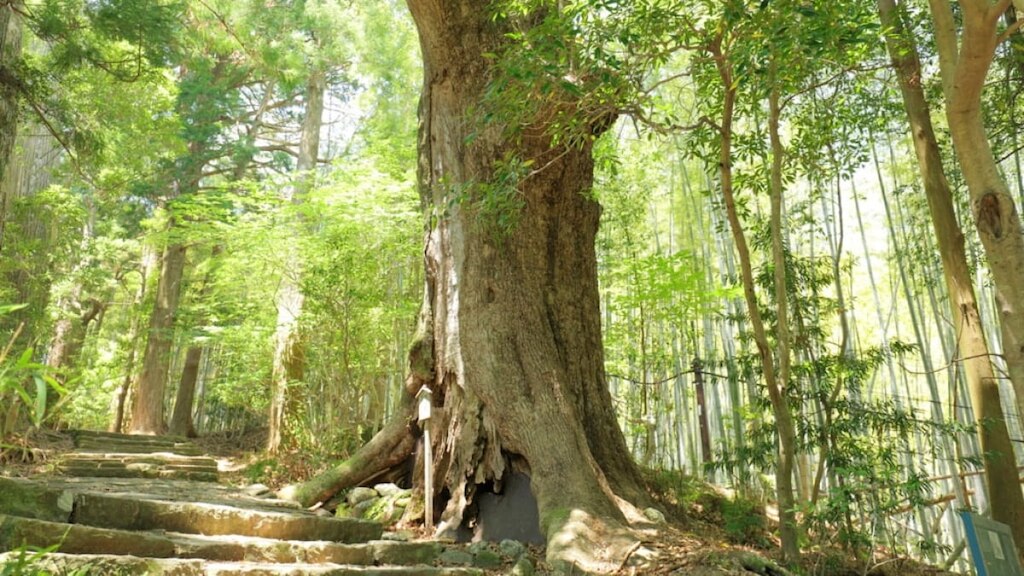
【Kumano Kodo】Daimonzaka sightseeing information latest 2022 Summary!|Take a walk through the Stage of Mythology
Jan 27, 2026
506 views
This explains the sightseeing walking course along the Kumano Kodo from Daimonzaka to Kumano Nachi Taisha.
Daimonzaka is a slope located on the Kumano Kodo, Wakayama’s classic sightseeing trail. The path leading to Kumano Nachi Taisha is a beautiful stone-paved road. For over 1,000 years, people have traveled this slope in Kumano, the land of sacred myths, making it one of the most popular routes among the ancient roads. As the “land of mythology,” the surrounding area is also known as a power spot.
The course introduced here from Daimonzaka to the area around Kumano Nachi Taisha is about 2.5 kilometers. Even beginners can walk it safely. For those visiting the Kumano Kodo for the first time, what kind of spot is the recommended Daimonzaka? Take a look and see.
table of contents
[x] close
【Kumano Kodo】Daimonzaka sightseeing information latest 2022 Summary!|Take a walk through the Stage of Mythology
What is Daimonzaka?
The Kumano Kodo, where Daimonzaka is located, is the collective name for the pilgrimage roads leading to Kumano Hongu Taisha, Kumano Hayatama Taisha, and Kumano Nachi Taisha. In 2004, it was recognized by UNESCO as a World Cultural Heritage site. Today it is cherished as a “walkable cultural heritage.” The “Daimonzaka” introduced here is a sightseeing spot along the Kumano Kodo.
The phrase “Ant Pilgrimage to Kumano” has been handed down. This refers to the days when devotion to the Kumano Sanzan was stronger than now, and so many worshippers visited that the lines of people never ended.
Daimonzaka is famous for its beautiful stone paving, but it is also covered in moss, filled with the sound of waterfalls, and pervaded with a mysterious atmosphere. At the entrance to the old road, you can even rent Heian-era costumes and take commemorative photos (for a fee).
Kumano Nachi Taisha with Many Highlights
At the top of a beautiful 467-step stone staircase stands Kumano Nachi Taisha, one of the Kumano Sanzan shrines. Its main deity is Kumano Fusumi no Okami (Izanami no Mikoto). The shrine, long revered by many people, has several must-see points.
One is the bronze statue of the three-legged crow “Yatagarasu,” considered the messenger of the gods of Kumano, located within the grounds. Other highlights include the “Crow Stone” associated with Yatagarasu, the prefecturally designated cultural property “Weeping Cherry Tree,” the “Treasure Hall” that displays essential materials for studying Kumano faith, and the “Shōreisha” where you can experience the “Pass-Through-the-Womb” ritual inside the hollow of an 850-year-old camphor tree. Don’t forget to collect the shrine stamp (goshuin) as well.
See Nachi Falls from Afar or up close?
This is a beautiful waterfall counted among the “Three Famous Waterfalls of Japan.” If you are traveling around Kumano Nachi Taisha, this is a must-see. It is also widely known as a power spot.
Nachi Falls itself is revered as the sacred object of Hirō Shrine, a branch shrine of Kumano Nachi Taisha. With the greatest drop in Japan, its sheer size makes its view from afar spectacular. After walking the old road and climbing the long stone stairs to the Otakimoto, the breathtaking sight awaiting you will surely move you.
On site, you can pay 300 yen to approach the waterfall more closely. Feel the negative ions created by the famous cascade directly. Along the way, there is also a place where you can drink “Longevity Water,” so be sure to stop by.
*The amount listed is as of December 2019.
If taking photos, go to Nachisan Seiganto-ji Temple
From Daimonzaka to Kumano Nachi Taisha, and next to the shrine lies Nachisan Seiganto-ji Temple.
From the three-storied pagoda behind the main hall, the view of Nachi Falls is extremely famous. Be sure to capture it in photos for its beauty. This temple was once a major training ground for syncretic Shinto-Buddhist practices until it was separated in the early Meiji era. The principal object of worship at Nachisan Seiganto-ji is Nyoirin Kannon Bodhisattva, said to have been discovered in the basin of Nachi Falls during the reign of Emperor Nintoku. It is only displayed three times a year, so visiting on those dates would be special.
Name: Nachisan Seiganto-ji Temple
Address: 8 Nachisan, Nachikatsuura-cho, Higashimuro-gun, Wakayama 649-5301
Official/Related Website: https://www.nachikan.jp/kumano/seiganto-ji/
Access and parking for Daimonzaka

Here are directions to Daimonzaka. Since train and bus services are limited, check the schedules in advance.
▼ If using train or bus
Get off at JR “Kii-Katsuura” Station. From Kii-Katsuura Station (bus stop name: Katsuura Station), take a Kumano Kotsu bus. Get off at Daimonzaka stop. Travel time is about 20 minutes. Depending on the time of day, using a taxi is also recommended.
▼ If using a car
Daimonzaka parking lot is free of charge. If you plan to walk Daimonzaka, this parking lot is recommended. Open 24 hours, capacity of 100 cars, with restrooms available.
Chinchoan Nachisan Shop is recommended for lunch
The charm of Chinchoan Nachisan Shop is that you can enjoy a view of Nachi Falls while having lunch. From the tatami seating, the view of the falls is spectacular (note: you cannot see it from the table seating). This is the best place to rest your tired body after walking.
Of course, you can order udon and soba, but we recommend choosing a menu set that includes Kumano’s local specialty “Mehari-zushi.” Chinchoan is also famous for “Moude Mochi,” so be sure to try it before leaving.
Name: Café Chinchoan Nachisan Shop
Address: 39 Nachisan, Nachikatsuura-cho, Higashimuro-gun, Wakayama 649-5301
Official/Related Website: https://moudemochi.com/
Recommended season and clothing
The best seasons for a trip to Daimonzaka are spring and autumn, when it is easier to walk. The recommended clothing is basically long sleeves and long pants, to prevent insect bites and injuries. Be sure to wear comfortable walking shoes or trekking shoes when visiting.
Since the Kumano Kodo is in a hot and humid region, it is best to avoid summer if possible. If you visit in summer, take thorough precautions against heatstroke and insects.
RELATED ARTICLES


REGIONS
CATEGORIES
FEATURED ON Japan
-
Ancient history stroll: 8 must-visit tourist spots in Kashihara City for history lovers
-
From the Southeastern of Mount Hakodate, “Tachimachi Cape,” you can gaze out over the sheer cliff coastline and toward the Shimokita and Tsugaru Peninsulas.
-

Informatio About Yokohama Anpanman Children’s Museum
-

5 Must-Visit Tourist Spots in Nagasaki You Can Enjoy Even on Rainy Days
-
A Town in Full Bloom! Top 5 Must-Visit Tourist Spots in Sera, Hiroshima
MOST POPULAR ON Japan
-
 1
1Doha: Must-see Attractions in the Capital of Qatar
-
 2
2Toronto: 10 Things to do in this Picturesque Canadian City
-
 3
3Amarillo: A City Famous for It’s Amazing Canyons, Great History and Music
-
 4
4South Korea: Dazzling Scenery, Rich Culture and Fascinating History
-
 5
5Kuwait: A Country in Middle East Asia Famous for Hot Sand Dunes and Stunning Cityscape