


Name: Vineyard Landscape of Piedmont: Langhe-Roero and Monferrato
Address: Piemonte, Italy
Official/Related Website URL: http://visitaly.jp/unesco/langhe-roero-e-monferrato
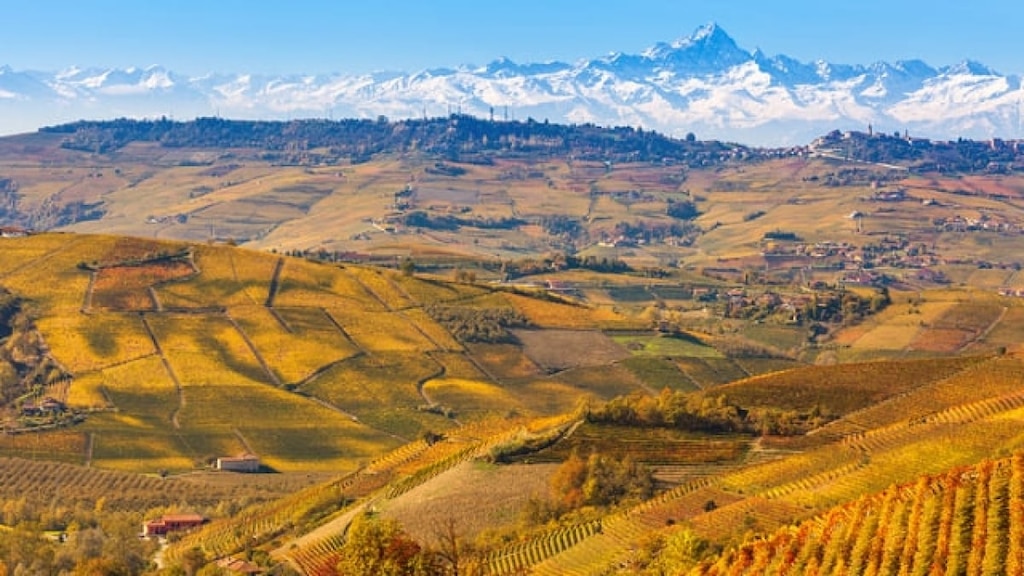
【World Heritage】Vineyards of Piedmont: What are Langhe, Roero, and Monferrato?
Jan 23, 2026
567 views
Italy, a great wine country alongside France. In recent years, Italian wine has grown in both quality and reputation, now standing shoulder to shoulder with France. Among them, some wines produced in Piedmont in northern Italy, centered around Turin, are traded at high prices due to their exceptional quality and are exported all over the world.
Up until the mid-18th century, Piedmont’s wines were of poor quality and not highly regarded. How, then, did they rise to become among the finest wines? This time, from a historical perspective, I would like to introduce the vineyard landscapes of Piedmont, registered as a UNESCO World Cultural Heritage Site.
table of contents
[x] close
【World Heritage】Vineyards of Piedmont: What are Langhe, Roero, and Monferrato?
- The Vineyard Landscapes of Piedmont: What are Langhe, Roero, and Monferrato?
- Access to Langhe-Roero and Monferrato in Piedmont
- Recommended Points of Langhe, Roero, and Monferrato ①: The Langhe-Roero Area
- Recommended Points of Langhe, Roero, and Monferrato ②: The Monferrato Area
- Recommended Points of Langhe, Roero, and Monferrato ③: The 18th-Century Wine Research Institute, Grinzane Cavour Castle
- ◎ Summary
The Vineyard Landscapes of Piedmont: What are Langhe, Roero, and Monferrato?
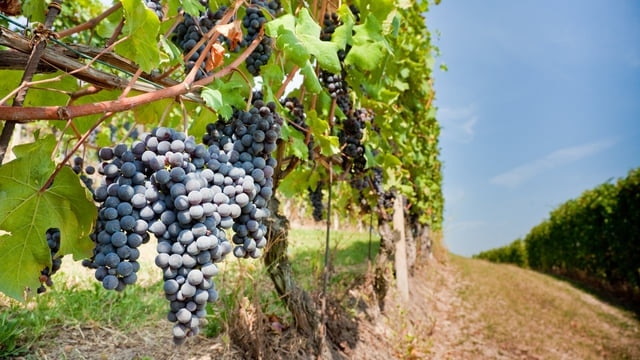
Piedmont, which means “foot of the mountains” in Italian, lies at the southern foothills of the Alps and has been a thriving wine-producing region since ancient times using wild varieties. The discovery of grape pollen dating back to the 5th century BC testifies to its long history of viticulture. However, as wine was mainly produced as a commoner’s drink, Piedmontese wine did not have a good reputation. From the mid-18th century, under the leadership of the nobleman Camillo Cavour, winemaking techniques in the region rapidly advanced.
Today, the wines have developed into renowned labels recognized worldwide. At the same time, this region—rich with a winemaking history dating back to antiquity—features vineyards laid out on sunny hillsides in harmony with castles, churches, and homes, creating a spectacular landscape. Due to this history and beauty, preserving the tradition of historical winemaking through its scenery, it was inscribed as a World Heritage Site in 2014.
Access to Langhe-Roero and Monferrato in Piedmont
The capital of Piedmont is Turin, Italy’s fourth largest city. From Milan to Turin it is about 1 hour by high-speed train.
The Langhe region lies on the eastern bank of the Tanaro River in southern Piedmont, while the Roero region lies on the western bank. Monferrato is somewhat separate from the others, but all are arranged in a semi-concentric arc from Turin. From Turin, visitors can either join a tour bus or rent a car.
Recommended Points of Langhe, Roero, and Monferrato ①: The Langhe-Roero Area
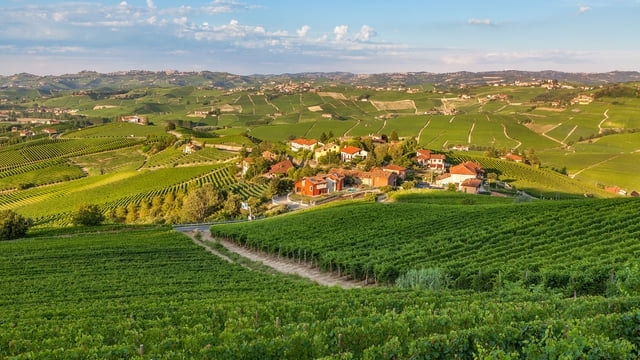
The most famous in the Langhe region is undoubtedly Barolo, called the “King of Wines.” Produced in the tiny village of Barolo, with just 700 residents and an area about two-thirds the size of Narita Airport, this top-class Italian red wine is made from the Nebbiolo grape.
Alongside Barolo, Barbaresco—called the “Queen of Wines”—is also produced here. The village of Barbaresco lies amidst beautiful hills, with medieval buildings and old wineries, and is one of the components of the World Heritage Site. In the neighboring Roero region, white wine production is thriving, particularly from the Arneis grape, whose name in Italian means “a bit of an odd one.”
Recommended Points of Langhe, Roero, and Monferrato ②: The Monferrato Area
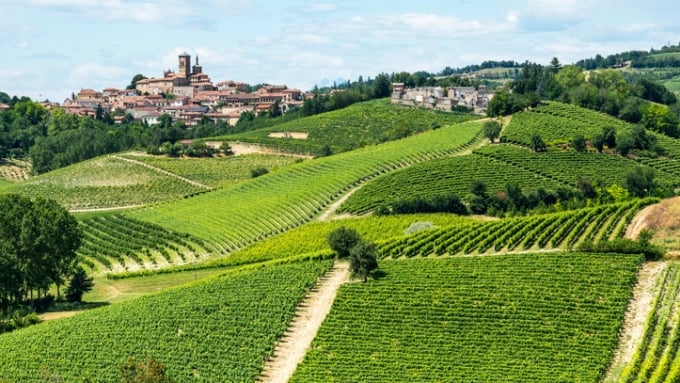
Many vineyards in Monferrato are laid out along hilly slopes, often crowned with castles, creating a unique and picturesque landscape. Around the small town of Nizza Monferrato, with a population of 10,000, red wine made from the Barbera grape—one of Piedmont’s main varieties—is produced.
Around the village of Canelli, large amounts of sparkling wine called Spumante, made from the Muscat grape, are produced and exported worldwide. These Spumanti are stored about 30 meters underground in cellars known as “cathedrals,” where natural forces regulate temperature and humidity. At the time of UNESCO inscription, these were highly praised from an architectural perspective.
Several wineries here offer guided tours. In addition, the Basso Monferrato area has many wine cellars carved directly into rock, and this is also one of the six World Heritage component sites.
Recommended Points of Langhe, Roero, and Monferrato ③: The 18th-Century Wine Research Institute, Grinzane Cavour Castle
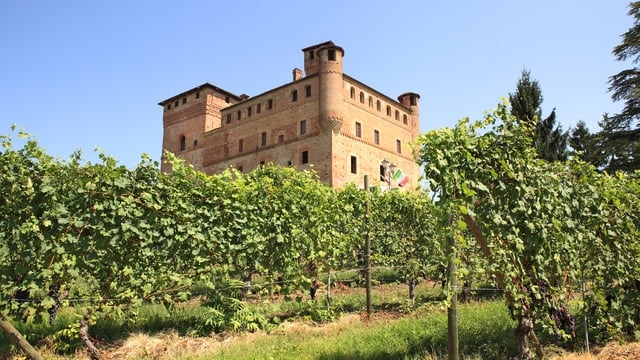
Barolo estate’s wines. He invited French oenologists and, through extensive research, succeeded in making Barolo a bold, heavy wine capable of long aging.
Impressed by Cavour’s efforts, the King of Sardinia provided this castle, which he used as a villa, to serve as a wine research institute. Later, Cavour improved wines in other regions as well, and Piedmont ultimately became a wine-producing region respected worldwide. Cavour, a hero of Piedmont, is also known for his efforts in the unification of Italy, becoming the first Prime Minister when the Kingdom of Sardinia became the Kingdom of Italy.
Today, the castle serves as a wine museum, a state-run wine shop, and a restaurant. It is also the venue for the auction of Piedmont’s specialty, white truffles.
◎ Summary
Through continuous improvements, Piedmontese wine has become one of the world’s great labels, truly the fruit of countless efforts. Behind this achievement are the endeavors of oenologists, architects who designed storage cellars for quality control, and, of course, the tireless work of grape growers.
Be sure to visit this region and taste Piedmontese wine for yourself. You will surely feel firsthand why the wine culture of this land has been recognized as a World Heritage Site.
RELATED ARTICLES


REGIONS
CATEGORIES
FEATURED ON France
-
Guadeloupe Visa Guide – French Caribbean Resort Travel Tips
-
The Flower Town of the Brittany Peninsula! 3 Recommended Sightseeing Spots in Lannion
-
Le Havre: The Rebuilt UNESCO World Heritage City – Top Attractions and Highlights
-

A City Filled with Traditional Sweets and Local Wines – The Best Souvenirs from Nantes
-
Introducing All 5 World Heritage Sites in Slovenia! Explore the Magnificent World Heritage of This Small Country
MOST POPULAR ON France
-
 1
1Doha: Must-see Attractions in the Capital of Qatar
-
 2
2Toronto: 10 Things to do in this Picturesque Canadian City
-
 3
3Amarillo: A City Famous for It’s Amazing Canyons, Great History and Music
-
 4
4South Korea: Dazzling Scenery, Rich Culture and Fascinating History
-
 5
5Kuwait: A Country in Middle East Asia Famous for Hot Sand Dunes and Stunning Cityscape