


Name: Ferrara, City of the Renaissance, and its Po Delta
Official Site & Related Link: https://goo.gl/mty3Vz
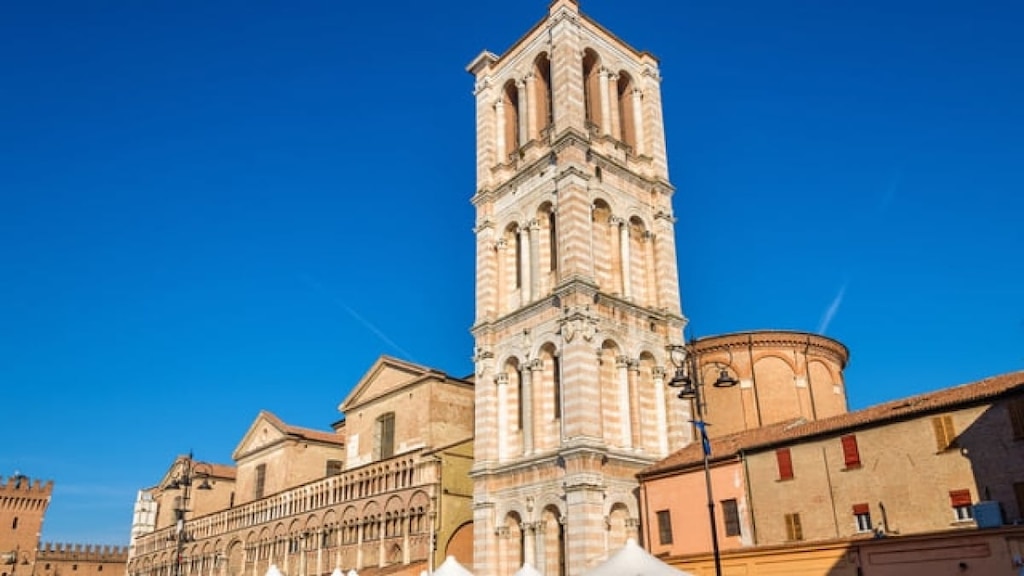
UNESCO World Heritage: Ferrara’s Renaissance Cityscape and the Po River Delta Explained
Mar 17, 2026
351 views
Flowing across northern Italy from west to east, the mighty Po River empties into the Adriatic Sea, and along its lower reaches lies the historic city of Ferrara. This remarkable destination was developed under the patronage of the influential Este family, one of Italy’s most powerful noble houses. Known for their deep appreciation of the arts, the Este family transformed Ferrara into a vibrant hub of culture during the Renaissance, attracting artists, scholars, and visionaries from across Europe.
Today, Ferrara still preserves its Renaissance charm, with numerous palaces and mansions adorned with distinctive early Renaissance terracotta decorations. Recognized for its invaluable cultural heritage and significant role in Western art history, Ferrara was designated a UNESCO World Heritage Site in 1995. Visiting this splendid tourist city offers a rare opportunity to step back in time and witness the grandeur of the Este family’s nearly 400-year reign, where art, architecture, and history merge into an unforgettable travel experience in Italy.
table of contents
[x] close
UNESCO World Heritage: Ferrara’s Renaissance Cityscape and the Po River Delta Explained
1. Ferrara, City of the Renaissance and the Po Delta Region
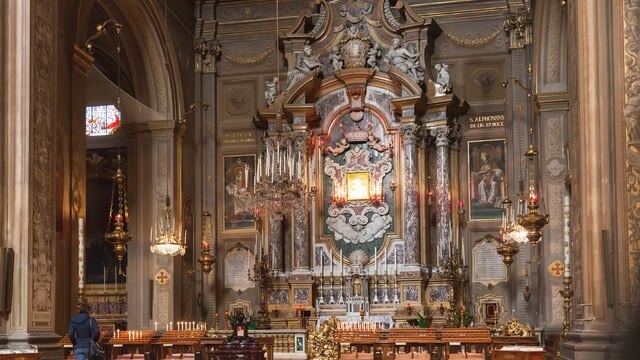
The Este family, originally Germanic Lombard nobles who ruled the town of Este southwest of Padua, moved their residence to Ferrara in 1196 after being appointed Marquises of Ferrara. From the 13th century, they began developing and fortifying the city.
For nearly 400 years, the Este family governed Ferrara as a semi-independent feudal state, fostering one of the most refined court cultures of the Renaissance. Under their patronage, the city flourished as a hub of art, architecture, and humanist thought, leaving a lasting legacy that still captivates visitors today.
However, by the late 16th century, the main family line ended. As a result, Ferrara was seized by the Pope and incorporated into the Papal States. The Este family never regained control, and Ferrara has since remained outside their rule.
How to Get to Ferrara
You can easily reach Ferrara by train from either Bologna or Padua, with a travel time of approximately 40 minutes to 1 hour. This makes it a convenient day trip or stopover destination in Italy’s Emilia-Romagna region.
If you’re arriving by air, Bologna is served by Bologna Guglielmo Marconi Airport. Also, you can connect via major hubs such as Moscow, Dubai, or Istanbul.
Ferrara Highlight ①: The Este Castle (Castello Estense)
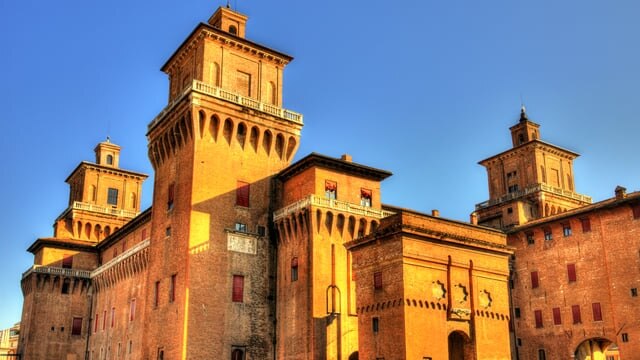
Ferrara is one of the rare medieval European cities where you’ll find a fully moated castle right in the heart of the old town. The imposing Este Castle was built in the late 14th century by the powerful Este family as a stronghold to protect themselves from an uprising caused by increased taxes. Over time, it evolved from a fortress into a luxurious residence, complete with four grand towers.
Although its exterior still bears the sturdy and defensive look of a battle-ready fortress, the interior reveals the elegance of the Este court culture. During the Renaissance, Ferrara became home to renowned painters of the “Ferrara School,” whose masterpieces can still be admired today.
Many rooms in the castle are now open to the public, showcasing priceless frescoes and even the old underground prison cells. Visitors can also climb the four towers for panoramic views. The Este Castle is a must-visit attraction, offering a unique blend of royal grandeur and military history.
Ferrara Highlight ②: Ferrara Cathedral
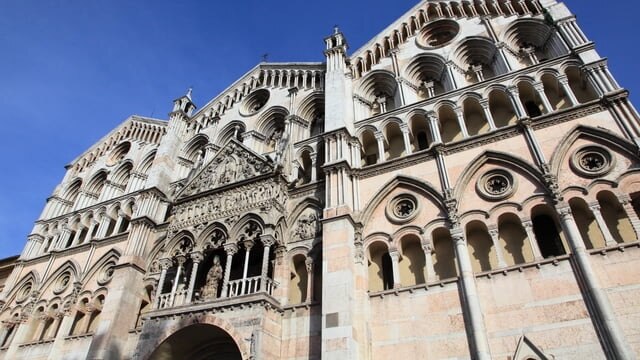
Officially known as the Cathedral of Saint George, the Ferrara Cathedral is a masterpiece that dates back to the early 12th century, originally built in the Romanesque style. Dedicated to Saint George, the city’s patron saint, this sacred site is both a spiritual center and an architectural gem.
One of the most striking features is its three-tiered façade, adorned with intricate sculptures. These layers depict The Last Judgment, Heaven, and Hell, making it a prime example of Romanesque sculpture. Inside, visitors can admire the 15th-century fresco Our Lady of Grace, a revered artwork that continues to inspire devotion today.
The Cathedral Museum houses a remarkable collection, including original sculptures and early Renaissance terracotta decorations. Adjacent to the cathedral stands Ferrara’s only stone building — the bell tower, distinguished by its design rooted in Roman classicism and enriched with 14th-century carvings. Together, these elements make the Ferrara Cathedral a must-visit landmark for history lovers and art enthusiasts exploring Italy’s Emilia-Romagna region.
Ferrara Highlight ③: Palazzo Schifanoia
Located in the southeastern part of Ferrara’s historic center, Palazzo Schifanoia is a remarkable landmark built in the 14th century by Alberto d’Este, head of the illustrious House of Este. While its exterior may not immediately appear palatial—having once been used as military barracks and even a tobacco factory after the Este family lost control of Ferrara—the building still carries the aura of the family’s former glory within its walls.
Today, the palace serves as a fascinating museum, showcasing valuable artworks and historical artifacts connected to the Este dynasty. The highlight for many visitors is the famous “Hall of the Months”, a must-see masterpiece adorned with vibrant frescoes depicting the changing seasons. These artworks provide a captivating glimpse into Renaissance art and the cultural sophistication of Ferrara’s golden age.
◎ Summary
Ferrara, with its Renaissance-era cityscape and the Po River Delta region, has preserved its cultural landscape since its foundation. This historic city owes much of its grandeur to the powerful Este family, whose influence shaped its architecture, arts, and urban planning.
In the vast expanse of the Po River’s fertile lands, visitors can enjoy both cultural exploration and outdoor activities, making it an ideal destination for active travelers. The city is rich in courtly traditions, with ongoing restoration and preservation efforts ensuring its charm endures for generations. As a UNESCO World Heritage Site, Ferrara offers an unforgettable experience, blending history, culture, and the natural beauty of Northern Italy.
RELATED ARTICLES


REGIONS
CATEGORIES
FEATURED ON Italy
-
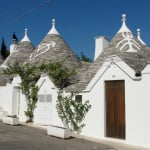
Alberobello’s Trulli – Italy’s Fairytale World Heritage Village
-
Amalfi Coast: Italy’s Breathtaking World Heritage Site and Scenic Wonder
-
Introducing recommended souvenirs you can buy in Genoa, Italy, the land of gourmet food!
-
【World Heritage Site】Cave Dwellings and Rock-hewn Churches of Matera|Introducing a hidden gem in Southern Italy
-
【World Heritage】What is the Historic Centre of Urbino?|A mountain town surrounded by ancient walls!
MOST POPULAR ON Italy
-
 1
1Doha: Must-see Attractions in the Capital of Qatar
-
 2
2Toronto: 10 Things to do in this Picturesque Canadian City
-
 3
3Amarillo: A City Famous for It’s Amazing Canyons, Great History and Music
-
 4
4South Korea: Dazzling Scenery, Rich Culture and Fascinating History
-
 5
5Kuwait: A Country in Middle East Asia Famous for Hot Sand Dunes and Stunning Cityscape