Hawaii’s First Railway! When Will the “Honolulu Rail Transit” Be Completed?
Hawaii is a popular resort destination visited by many tourists. While Hawaii has long been seen as part of America’s car-dependent culture, seemingly unrelated to railways, the state is actually constructing its very first rail line! We looked into the much-talked-about “Honolulu Rail Transit.” Although its opening is still some time away, here is the latest information along with an overview of Honolulu’s transportation situation.
table of contents
[x] close
Hawaii’s First Railway! When Will the “Honolulu Rail Transit” Be Completed?
1. Honolulu’s Transportation Situation
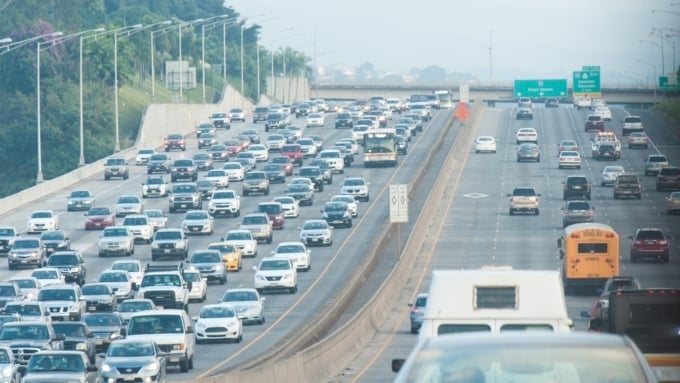
Many people imagine Hawaii as a paradise-like place where one can relax slowly and peacefully. However, in reality, the City of Honolulu is facing a serious issue—traffic congestion.
Hawaii’s population is a little over 1.3 million. Nearly 1 million of those residents live on Oahu, the island where the state capital Honolulu is located. Oahu has one of the highest population densities in the United States, and with rapid housing development in the western part of the Honolulu metropolitan area, rush-hour congestion has become severe.
To address this traffic issue, a public referendum was held in 2008, and a budget of over 500 billion yen was approved for a rail project connecting western Oahu to downtown Honolulu.
2. What Is the Honolulu Rail Transit?
The Honolulu Rail Transit is an elevated rapid transit rail system that will run approximately 32 km from the Ala Moana Center shopping mall in central Honolulu to Kapolei in western Oahu. The train cars are manufactured by Hitachi Rail Italy, a member of the Hitachi Group, which has also contributed to rail systems in Taipei and New Taipei.
The trains will consist of four cars, and the journey between East Kapolei Station and Ala Moana Center Station will take about 41 minutes. Fares will be unified with Honolulu’s public bus system, TheBus. Another notable feature is that the system is fully automated with no drivers. Additionally, the trains will have onboard surfboard racks—definitely a Hawaii-style touch.
3. Route Plan Information for the Honolulu Rail Transit
A total of 21 stations are planned, with Daniel K. Inouye International Airport—Hawaii’s main gateway—as one of the central stops. For tourists, the biggest appeal is being able to reach Ala Moana Center from the airport in just 16 minutes without getting stuck in traffic. Along the way are downtown and Chinatown, and there are even plans to eventually extend the line toward Waikiki.
On the opposite side of the airport, a station is planned for Pearl Harbor Naval Base, making the rail line convenient for Pearl Harbor–related sightseeing. After passing the next station, Aloha Stadium, the line will travel through suburban residential areas and near schools until it reaches its terminal, East Kapolei Station.
4. When Will It Be Completed?
The Honolulu Rail Transit Project is divided into two phases. First, the section between East Kapolei and Aloha Stadium will open; then the remaining section between Aloha Stadium and Ala Moana Center will follow.
Originally, the first phase was scheduled to be completed in 2017, but as with any large-scale project anywhere in the world, delays occurred. As of 2019, the East Kapolei–Aloha Stadium section is announced to open in the second half of 2020, while the Aloha Stadium–Ala Moana Center section is planned to open in 2025.
However, as mentioned earlier, the East Kapolei–Aloha Stadium section runs through residential areas, so it won’t fully serve tourists until the entire line is open.
◎ Summary
We have summarized key points about Hawaii’s first railway currently under construction, the “Honolulu Rail Transit.” By 2030, it is expected that nearly 200,000 people will use the train each week, reducing the number of cars on Oahu’s roads by about 40,000. Although the project’s main purpose is to provide a commuting option for Oahu residents, once the full line opens, Hawaii’s roads may become more comfortable and its transportation image may change significantly for tourists as well.