


Name: Socotra Archipelago
Address: East of Aden Gulf, Aden, Yemen
Official UNESCO Page: http://whc.unesco.org/en/list/1263
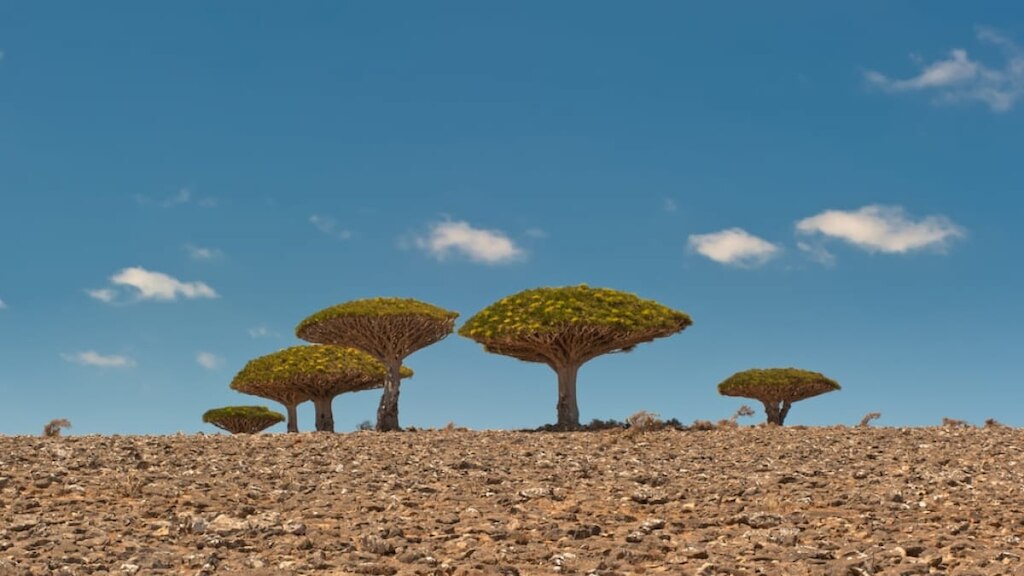
A Surreal Otherworld Awaits! Discover the Enchanting Wonders of Yemen’s UNESCO-listed Socotra Islands
Mar 18, 2026
341 views
The UNESCO World Heritage Site of Socotra Island lies in the Indian Ocean, about 350 kilometers southeast of Yemen, floating in the Arabian Sea. Together with the surrounding small islands, it is collectively called the Socotra Archipelago. Interestingly, Socotra is geographically closer to the easternmost point of Somalia in Africa—only about 230 kilometers away—than to mainland Yemen. Strategically located along the historic Maritime Silk Road, the island once served as a crucial trading hub linking Arabia, India, and Greece.
Stepping onto Socotra Island, it becomes immediately clear why it is called the "Galápagos of the Indian Ocean". The landscape is filled with rare, otherworldly plants and animals found nowhere else on Earth, making you wonder if you have stepped into another world. As one of Yemen’s most treasured World Heritage sites, the Socotra Archipelago offers breathtaking biodiversity and a unique natural environment, which we will explore in detail.
table of contents
[x] close
A Surreal Otherworld Awaits! Discover the Enchanting Wonders of Yemen’s UNESCO-listed Socotra Islands
Yemen’s UNESCO World Heritage Site: The Socotra Archipelago
The Socotra Archipelago, located east of the Gulf of Aden in Yemen, is home to Socotra Island, a unique landmass stretching about 130 km in length and 45 km in width. Its origins trace back to the breakup of the ancient Gondwana supercontinent, when it separated from mainland Africa. Due to the region’s harsh, arid climate and limited rainfall, the island’s wildlife and plants have undergone millions of years of isolated evolution, resulting in rare and otherworldly landscapes found nowhere else on Earth.
Despite its extraordinary biodiversity, Socotra remained largely unknown to the world until 1999, when its airport opened and allowed tourists to visit. In 2008, the UNESCO World Natural Heritage designation was granted to protect its endemic ecosystems, unique evolutionary heritage, and endangered species of universal value. Since then, global interest in this ecological treasure has been steadily rising.
How to Get to Socotra Island
Travelers first fly via Dubai or other transit hubs to Sana’a International Airport in Yemen’s capital. From there, flights to Socotra Airport are available via Yemenia Airways (the national carrier) or the low-cost Felix Airways. The total travel time is about 2 hours from Sana’a to Socotra.
Since Socotra is not heavily developed for tourism, it is advisable to arrange a local driver in advance. The best time to visit is spring or summer, as December to February brings heavier rainfall.
Yemen’s Socotra Islands Highlight ①: The Surreal Landscape of Unique Trees
One of the first things that captivates visitors to Socotra Island is its otherworldly trees. Home to around 840 plant species, more than 300 of which are found nowhere else on Earth, the island offers a botanical experience unlike any other. The combination of turquoise seas, pristine white beaches, and these rare plants creates a view that is truly exclusive to Socotra.
In the island’s central Dixam Plateau, you’ll find the famous Dragon’s Blood Trees, with their distinctive umbrella-like shape. The tree’s crimson sap was historically used as a dye, ink ingredient, and in traditional medicine as a hemostatic and pain reliever. When hardened, the sap—known as “dragon’s blood”—resembles rubies and was highly valued in Ancient Rome, medieval Europe, and China. Sadly, the habitat of these iconic trees is shrinking year by year, with experts warning they could vanish within the next 30 years if nothing changes. Now a UNESCO World Heritage Site, Socotra faces the crucial task of protecting and regenerating these trees for future generations.
The island’s northeast is home to more Dragon’s Blood Trees along with the distinctive Bottle Trees, whose swollen trunks resemble water flasks. Other botanical wonders include the Cucumber Tree—the only gourd family tree in the world—the fragrant Frankincense Tree used for incense and perfumes, and the vivid red succulent Kalanchoe farinacea. Exploring Socotra’s diverse flora turns sightseeing into an adventure, making a single day feel far too short. For nature lovers, a visit here promises a truly fulfilling travel experience.
Yemen’s Socotra Islands Highlight ②: Unique and Endemic Wildlife
The Socotra Islands are a true paradise for nature lovers, home to around 200 rare species of birds, animals, and insects—over 30 of which can only be found here. Among its most famous residents is the endangered Egyptian vulture, attracting birdwatchers from all over the world who travel to the islands just to catch a glimpse of this majestic bird.
Other fascinating creatures include the Socotra skink, which blends perfectly with tree bark, and a striking green chameleon that adds a splash of color to the landscape. Visitors can explore the lush flora, searching for extraordinary plants and animals that cannot be seen in most parts of the world.
The islands are surrounded by crystal-clear beaches where migratory birds can sometimes be spotted. For marine enthusiasts, snorkeling and diving reveal an underwater world teeming with colorful fish gracefully swimming in vibrant coral reefs—making Socotra a breathtaking destination for both land and sea exploration.
◎ Summary
In this article, we introduced the Socotra Archipelago in Yemen—a World Heritage Site that feels like an otherworldly paradise far removed from Earth. While access to the islands can be challenging, their unique endemic plants and bird species make them an extraordinary destination for nature lovers. Socotra Island offers hotels and restaurants, giving travelers the chance to experience this mysterious and captivating land at least once in their lifetime. However, as of April 2018, the Ministry of Foreign Affairs has issued a Level 4 evacuation advisory for the area. If you are considering traveling for tourism, it is strongly recommended to wait until the security situation improves and to always follow the latest overseas safety information provided by the Ministry of Foreign Affairs.
RELATED ARTICLES





REGIONS
CATEGORIES
FEATURED ON Yemen

MOST POPULAR ON Yemen
-
 1
1Doha: Must-see Attractions in the Capital of Qatar
-
 2
2Toronto: 10 Things to do in this Picturesque Canadian City
-
 3
3Amarillo: A City Famous for It’s Amazing Canyons, Great History and Music
-
 4
4South Korea: Dazzling Scenery, Rich Culture and Fascinating History
-
 5
5Kuwait: A Country in Middle East Asia Famous for Hot Sand Dunes and Stunning Cityscape