


Name: Historic Town of Grand-Bassam
Address: Grand-Bassam, Sud-Comoé, Côte d'Ivoire
Official Website: http://whc.unesco.org/en/list/1322
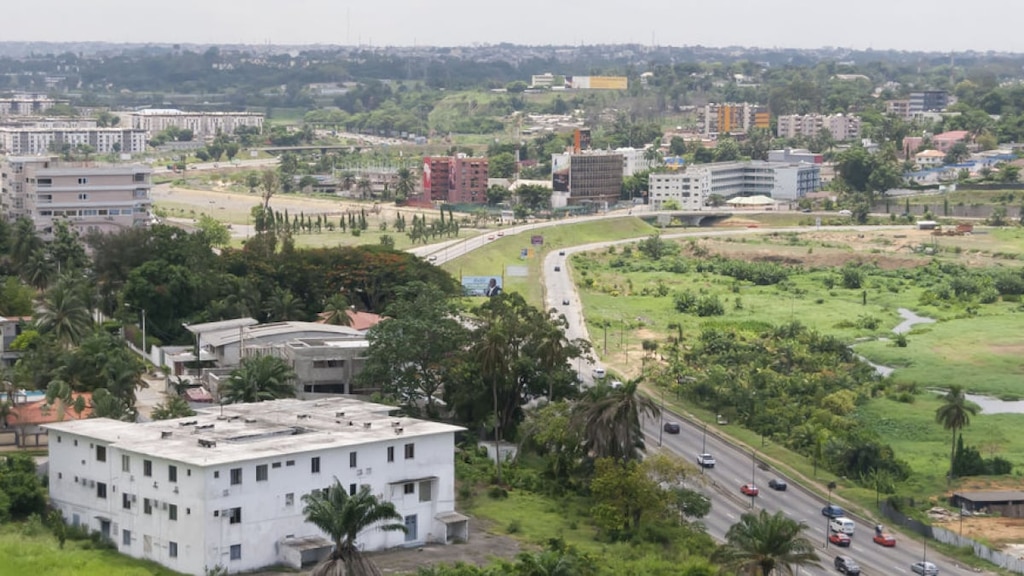
World Heritage Sites in Côte d’Ivoire Home to Rare Wildlife and Plants!
Dec 18, 2025
660 views
The Republic of Côte d'Ivoire (commonly known as Côte d'Ivoire) is a country in West Africa blessed with abundant natural beauty. The official language is French. The nation has one cultural heritage site and three natural heritage sites registered with UNESCO — including historic towns that preserve the remnants of the French colonial era and national parks that protect rare and endangered species. Below is an overview of Côte d'Ivoire’s UNESCO World Heritage Sites.
table of contents
[x] close
World Heritage Sites in Côte d’Ivoire Home to Rare Wildlife and Plants!
1. Historic Town of Grand-Bassam
Located in southeastern Côte d'Ivoire in the Sud-Comoé region, Grand-Bassam is an ancient town that preserves the historic landscape from the French colonial period. This area was inscribed as a UNESCO World Cultural Heritage Site in 2012 under the name “Historic Town of Grand-Bassam.” It was the first cultural heritage site in Côte d'Ivoire.
Designated as the capital in 1893, Grand-Bassam played a crucial role as a base for colonial development. However, due to an outbreak of yellow fever, its population drastically declined, leading to the capital’s relocation to Bingerville in 1900. Later, as Abidjan along the Ébrié Lagoon grew rapidly, Grand-Bassam’s prominence diminished.
Since the 1970s, efforts have been made to preserve and restore its historic buildings, and many colonial structures remain intact today. With its streets that reflect a deep sense of history and its scenic beaches, Grand-Bassam is now a popular tourist destination.
2. Mount Nimba Strict Nature Reserve
The Mount Nimba Strict Nature Reserve, which includes the main part of Mount Nimba spanning both Guinea and Côte d'Ivoire, was inscribed as a UNESCO Natural World Heritage Site in 1981 for the Guinean portion and in 1982 for the Ivorian portion. Rising to an elevation of 1,752 meters, Mount Nimba is the highest point in both countries. The reserve covers about 180 square kilometers and includes tropical rainforests and savannas.
This area is home to over 500 species of animals, including duikers, civets, and the rare Nimba toad. It also supports more than 2,000 species of plants. Because it is a strictly protected nature reserve, tourists are not allowed to enter, but its untouched wilderness makes it one of the most beautiful natural heritage sites in the world.
Name: Mount Nimba Strict Nature Reserve
Official Website: http://whc.unesco.org/en/list/155
3. Taï National Park
Located in western Côte d'Ivoire, Taï National Park was registered as a UNESCO Natural World Heritage Site in 1982. It was designated a national park in 1972 and spans a vast 3,300 square kilometers. The park is home to one of the few remaining primary tropical rainforests in West Africa — so rare that it is often called “the last primary forest in West Africa.”
The park provides a habitat for various wild animals, including pygmy hippos, chimpanzees, and several endangered species. It also hosts a great diversity of plants, such as Thaumatococcus daniellii, a plant known for being 5,000 to 8,000 times sweeter than sugar. Taï National Park offers a unique opportunity to witness rare flora and fauna, a true testament to the richness of natural heritage.
Name: Taï National Park
Address: Taï National Park, Guiglo, Moyen-Cavally, Côte d'Ivoire
Official Website: http://whc.unesco.org/en/list/195
4. Comoé National Park
Registered as a UNESCO Natural World Heritage Site in 1983, Comoé National Park is the largest national park in West Africa, located along the Comoé River Basin. Blessed with vast wetlands and savannas, the park is home to a wide range of wildlife such as antelopes, buffaloes, elephants, and numerous plant species. It is also inhabited by the Lobi people.
The region was once notorious for elephant hunting, and poaching remained a serious problem for years. In addition, the park suffered from overgrazing and poor management, which led to its inclusion on the List of World Heritage in Danger. However, after significant improvements in conservation efforts, it was successfully removed from that list in 2017.
Name: Comoé National Park
Address: Comoé National Park, Côte d'Ivoire
Official Website: http://whc.unesco.org/en/list/227
◎ Summary
Côte d'Ivoire is home to four beautiful World Heritage Sites, each offering a wealth of attractions for visitors. With its abundance of natural heritage, it’s a perfect destination for those who want to see rare wildlife and enjoy the grandeur of untouched nature. When visiting Côte d'Ivoire, be sure to include these World Heritage Sites in your travel plans to experience the country’s remarkable harmony of nature and history.
RELATED ARTICLES




REGIONS
CATEGORIES
FEATURED ON Côte d'Ivoire

MOST POPULAR ON Côte d'Ivoire
-
 1
1Doha: Must-see Attractions in the Capital of Qatar
-
 2
2Toronto: 10 Things to do in this Picturesque Canadian City
-
 3
3Amarillo: A City Famous for It’s Amazing Canyons, Great History and Music
-
 4
4South Korea: Dazzling Scenery, Rich Culture and Fascinating History
-
 5
5Kuwait: A Country in Middle East Asia Famous for Hot Sand Dunes and Stunning Cityscape