


Name: Matobo Hills
Official Website: http://whc.unesco.org/en/list/306
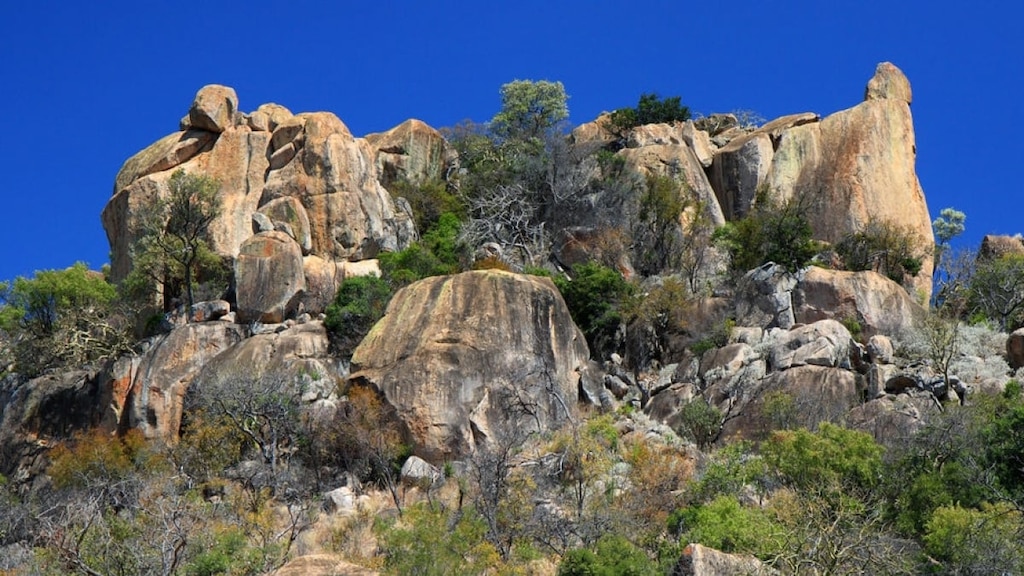
The Matobo Hills, a Zimbabwe World Heritage Site Formed Over 2 Billion Years Ago
May 26, 2026
342 views
Did you know that Zimbabwe is home to a site formed over 2 billion years ago and now registered as a World Heritage site? This is the Matobo Hills, a place filled with attractions that draw tourists from all over the world—such as more than 30,000 precious rock paintings, diverse wildlife and plant species, beautiful landscapes, and vast natural scenery. In this article, we introduce Zimbabwe’s World Heritage site, the Matobo Hills.
table of contents
[x] close
The Matobo Hills, a Zimbabwe World Heritage Site Formed Over 2 Billion Years Ago
What Are the Matobo Hills?
The Matobo Hills is a region consisting of granite hills and wooded valleys that stretch roughly 35 km south of Bulawayo in southern Zimbabwe. It was registered as a World Heritage site in 2003. Meaning “bald heads,” the Matobo Hills were formed over 2 billion years ago through granite pushed up to the earth’s surface. They were named by King Mzilikazi, who founded the Ndebele nation. The entire area where these hills stand covers an astonishing 3,100 square kilometers, of which 440 square kilometers make up Zimbabwe’s oldest national park.
The area offers numerous attractions, including designated recreational zones, stocks of game animals such as black and white rhinos, and stunning natural landscapes. The hills were originally settled by the San people about 2,000 years ago, though evidence shows that humans lived in the caves even earlier, leaving behind red rock paintings. The area has long been considered a sacred site for southern African peoples, including the Shona, where rituals and ceremonies have been held for many generations. There is even a legend that the voices of spirits can still be heard from the caves of the Matobo Hills.
Access to the Matobo Hills
The Matobo Hills lie about 35 km south of Bulawayo in southern Zimbabwe and approximately 500 km from Harare, the capital. Because of the distance, the most efficient way to reach the area from the city center is by airplane rather than by car or bus. Near Bulawayo is the Joshua Mqabuko Nkomo International Airport, which you can use. It takes less than an hour to fly from Harare International Airport. From Joshua Mqabuko Nkomo Airport to the Matobo Hills is about 40 km, which takes roughly one hour by car or taxi.
Recommended Highlight of the Matobo Hills ①: Rock Paintings
The greatest attraction of the Matobo Hills is the rock paintings scattered throughout the area. Created by the San people, these paintings reflect religious significance and more than 30,000 have already been discovered. Some of the oldest are known to be at least 20,000 years old. However, despite their value, these rock paintings are extremely fragile and susceptible to damage from various factors. For preservation purposes, public access to many of the paintings is restricted.
When visiting Zimbabwe, be sure to stop by the UNESCO-listed Matobo Hills to carefully view these rock paintings, which offer both historical ambiance and artistic appeal. There is also an adjacent museum displaying tools and artifacts from daily life during those times, which you can enjoy along with the paintings. Please note that touching the rock art, damaging it, or throwing water on it is punishable under Zimbabwean law, so take extra care.
Recommended Highlight of the Matobo Hills ②: Grand Natural Scenery
One of the attractions of the Matobo Hills is that, in addition to its historical ambiance, you can enjoy magnificent natural landscapes. Within the Matobo Hills lies the Rhodes Matopos National Park, home to a lookout point called “The World’s View,” from which you can enjoy a panoramic view of the Matobo Hills. Meaning “Hill of the Spirits,” the view from this summit is absolutely breathtaking.
In addition to beautiful scenery, the vast savannas are home to rhinos, giraffes, zebras, leopards, and more. There are also around 200 types of trees—including acacia and pear trees—over 100 species of plants including aloes and herbs, 175 species of birds, 88 species of mammals, 39 types of snakes, and 16 fish species. Notably, the Matobo Hills are known to have one of the highest leopard population densities in the world, so searching for them can be an exciting activity.
When visiting the Matobo Hills, take your time to enjoy not only the historical sites such as rock paintings and caves, but also the vast African wilderness—an experience you cannot have elsewhere.
◎ Summary
This article introduced Zimbabwe’s World Heritage site, the Matobo Hills. Formed over 2 billion years ago, the Matobo Hills contain more than 30,000 precious rock paintings depicting people and animals, a lookout point called “The World’s View” offering panoramic views of the hills, and great natural expanses inhabited by diverse wildlife. When visiting Zimbabwe, be sure to experience this captivating World Heritage site and enjoy the country's history, nature, and culture all in one place.
RELATED ARTICLES



REGIONS
CATEGORIES
FEATURED ON Zimbabwe
-

Safety Information for Zimbabwe, Home of Victoria Falls: Beware of Pickpockets and Robbery!
-

Introducing Zimbabwe’s traditional arts and modern shopping spots!
-

Let’s buy souvenirs in Zimbabwe! Introducing world-famous items!
-

4 Recommended Tourist Spots in Bulawayo, Zimbabwe’s Second Largest City!
-

Let’s enjoy the World Heritage Site Victoria Falls in Zambia and Zimbabwe!
MOST POPULAR ON Zimbabwe
-
 1
1Doha: Must-see Attractions in the Capital of Qatar
-
 2
2Toronto: 10 Things to do in this Picturesque Canadian City
-
 3
3Amarillo: A City Famous for It’s Amazing Canyons, Great History and Music
-
 4
4South Korea: Dazzling Scenery, Rich Culture and Fascinating History
-
 5
5Kuwait: A Country in Middle East Asia Famous for Hot Sand Dunes and Stunning Cityscape