


Name: Le Havre, the City Rebuilt by Auguste Perret
Address: Le Havre, France
Official Website: http://whc.unesco.org/en/list/1181
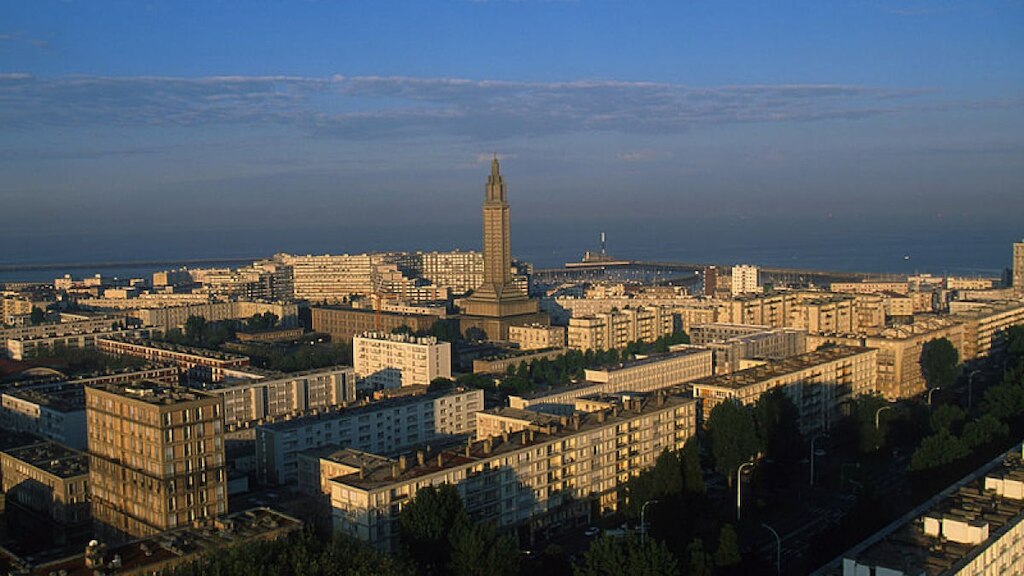
Le Havre: The Rebuilt UNESCO World Heritage City – Top Attractions and Highlights
Mar 17, 2026
408 views
The heart of Le Havre, a port city in northern France, underwent an extraordinary transformation through large-scale reconstruction after World War II. Rebuilt under the visionary guidance of Auguste Perret, the city earned recognition as a UNESCO World Heritage Site for its outstanding example of 20th-century urban planning. Auguste Perret, a Belgian-born architect who flourished in France during the 20th century, was celebrated for pioneering innovative architectural techniques using concrete—earning him the title “Father of Concrete.”
In the aftermath of the war, when Le Havre was left in ruins, Perret’s masterful reconstruction restored the city to life, preserving its architectural harmony and cultural significance. Today, Le Havre stands as a vibrant tourist destination, attracting visitors from around the world who come to admire its heritage. This UNESCO-listed city continues to showcase Perret’s remarkable works, offering travelers a glimpse into a unique blend of modernist design and historical resilience.
table of contents
[x] close
Le Havre: The Rebuilt UNESCO World Heritage City – Top Attractions and Highlights
1. Le Havre, The Rebuilt City by Auguste Perret
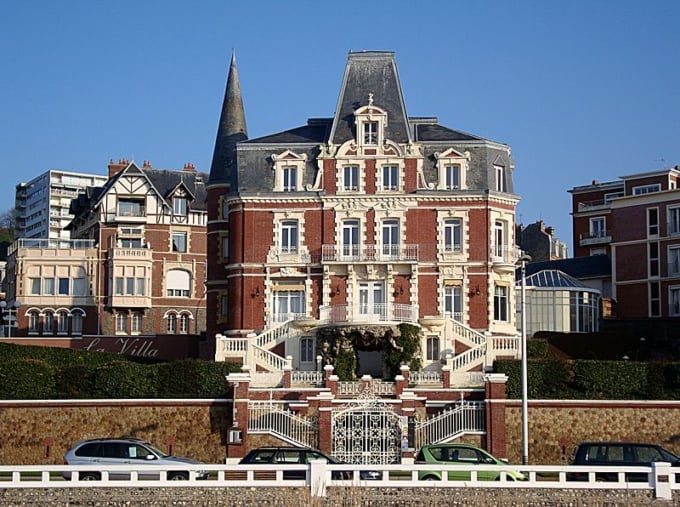
Le Havre, located in France, stands as a remarkable example of post-war urban reconstruction and was inscribed as a UNESCO World Heritage Site in 2005 for its innovative rebuilding techniques. During World War II, the city was initially used by British forces but later fell under German occupation. In 1944, to target German forces, the British carried out heavy bombings that devastated the heart of Le Havre, destroying much of its city center and port.
Suffering one of the most extensive damages in Europe, Le Havre faced the urgent need for total reconstruction. In 1945, France’s Ministry of Reconstruction launched a project that would transform the war-torn city into a masterpiece of modern urban planning. The task was entrusted to Auguste Perret, a prominent French architect of the time, who spent nearly 20 years bringing the new city to life.
Perret’s design, now recognized globally, featured a grid layout with wide, airy streets that enhanced ventilation and sunlight. This approach not only rebuilt what was lost but created a modern, livable environment from the ground up. Today, visitors can explore Le Havre’s harmonious blend of functionality and aesthetics, appreciating its significance in 20th-century architectural history. Even for those not deeply interested in architecture, strolling through the city offers a captivating experience filled with history and beauty.
Access to the Rebuilt City of Le Havre
The most convenient option to travel to Le Havre is to first travel to one of France’s major cities and then continue your journey by train. From Paris, the train ride takes approximately 2 hours, while from Lyon it’s about 5 hours. You can also reach Le Havre from other cities such as Marseille and Avignon, making it accessible from various parts of France.
Highlight ①: Saint Joseph’s Church
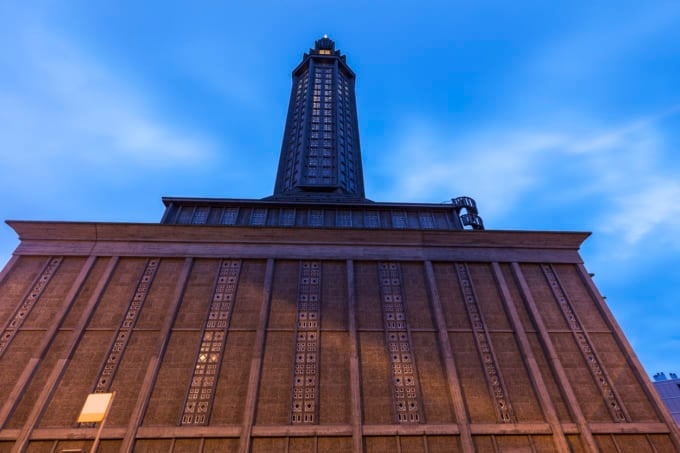
Saint Joseph’s Church, one of the most famous landmarks in Le Havre’s UNESCO-listed reconstructed city, is the final masterpiece of renowned architect Auguste Perret. This modern church not only stands out for its striking architecture but also serves as a moving monument dedicated to the victims of World War II.
Although Perret passed away before its completion, his vision was faithfully carried out by Georges Brochard. The church’s Greek-cross layout, octagonal spire, and stunning stained glass windows beautifully showcase Perret’s design sensibilities. A true symbol of Le Havre’s postwar rebirth, Saint Joseph’s Church underwent major restoration in 2005, during which a magnificent pipe organ was installed. It remains a must-visit destination for travelers exploring the city’s world heritage treasures.
Highlight ②: Le Havre City Hall
Located at the heart of Le Havre’s reconstructed city, Le Havre City Hall stands as a symbolic centerpiece of the post-war urban renewal. The spacious square in front is adorned with vibrant flower beds and elegant fountains, creating a relaxing gathering place for both locals and tourists. Thanks to its excellent and easy-to-find location, it serves as a perfect starting point for exploring Le Havre’s UNESCO World Heritage Sites.
Facing the square, the City Hall exudes the grandeur of a UNESCO landmark. Designed by Auguste Perret, the visionary behind Le Havre’s reconstruction, the building showcases the bold use of concrete in modern urban planning. Its tall tower, rising like a bell tower, has become an iconic symbol of the city’s rebirth. With its dignified presence and historical significance, Le Havre City Hall is truly a must-see for visitors.
Highlight ③: André Malraux Museum of Modern Art (MuMa)
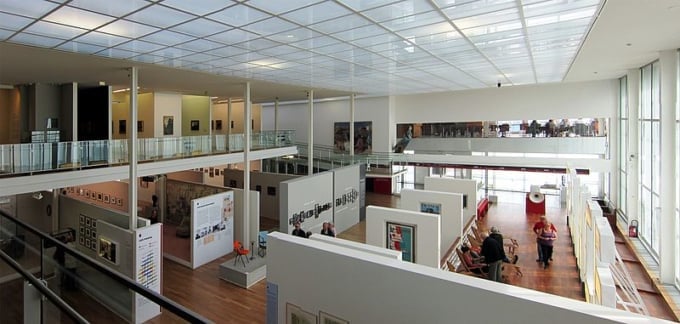
Rebuilt between 1959 and 1961, the André Malraux Museum was one of the earliest art museums in France to be reconstructed after World War II. Today, it is one of Le Havre’s most beloved UNESCO-listed attractions. Its minimalist, modern architecture—featuring glass, steel, and clean lines—reflects an elegant, contemporary style. When sunlight pours into the predominantly white structure, the interior becomes bright, airy, and inviting.
True to the city’s modernist spirit, the museum radiates a refined beauty befitting a UNESCO heritage site. Visitors can also enjoy the spacious gift shop, perfect for browsing unique souvenirs, or dine at the on-site restaurant while admiring scenic views of Le Havre. A visit to Le Havre’s reconstructed city wouldn’t be complete without stepping into the André Malraux Museum.
◎ Summary
Le Havre is a shining example of resilience—a city that, despite losing almost everything in the tragic events of war, has risen magnificently from the ashes. Today, as a UNESCO World Heritage Site, Le Havre is more than just a showcase of exceptional architectural achievements; it is also a place that invites visitors to reflect on history, culture, and the spirit of renewal. Among Europe’s many UNESCO-listed cities, Le Havre stands out as a uniquely reconstructed urban masterpiece. If you’re exploring France or seeking remarkable heritage destinations in Europe, a visit to Le Havre promises an inspiring and unforgettable experience.
RELATED ARTICLES



REGIONS
CATEGORIES
FEATURED ON France
-
Guadeloupe Visa Guide – French Caribbean Resort Travel Tips
-
The Flower Town of the Brittany Peninsula! 3 Recommended Sightseeing Spots in Lannion
-

A City Filled with Traditional Sweets and Local Wines – The Best Souvenirs from Nantes
-

【World Heritage】Vineyards of Piedmont: What are Langhe, Roero, and Monferrato?
-

Introducing All 5 World Heritage Sites in Slovenia! Explore the Magnificent World Heritage of This Small Country
MOST POPULAR ON France
-
 1
1Doha: Must-see Attractions in the Capital of Qatar
-
 2
2Toronto: 10 Things to do in this Picturesque Canadian City
-
 3
3Amarillo: A City Famous for It’s Amazing Canyons, Great History and Music
-
 4
4South Korea: Dazzling Scenery, Rich Culture and Fascinating History
-
 5
5Kuwait: A Country in Middle East Asia Famous for Hot Sand Dunes and Stunning Cityscape