


Name: Taga Taisha Shrine
Address: 604 Taga, Taga-cho, Inukami-gun, Shiga Prefecture, Japan
Official Website: http://www.tagataisya.or.jp/
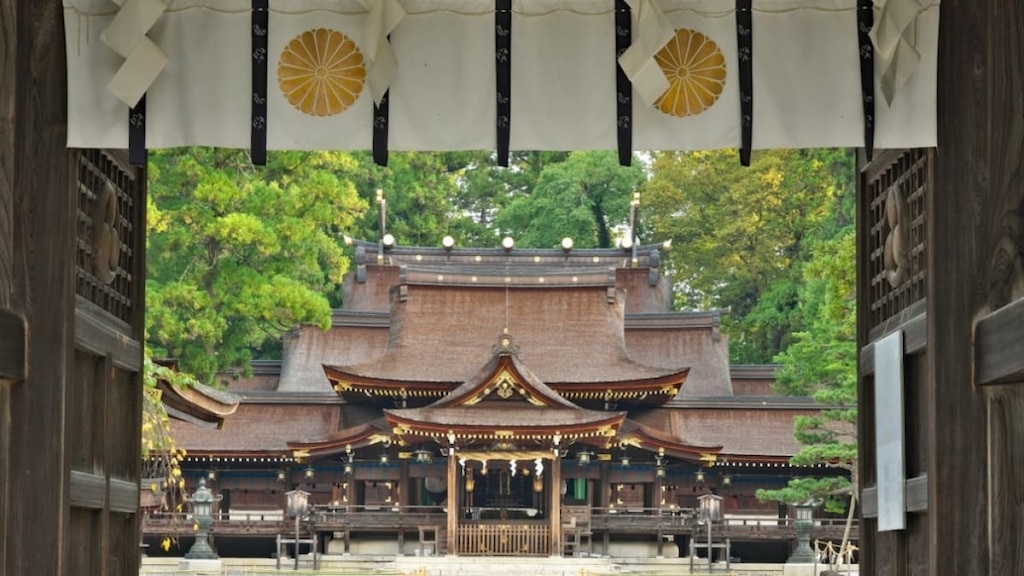
Shiga’s Taga Taisha Shrine: Discover the Lucky Rice Paddle and Its Blessings for Longevity
Mar 17, 2026
412 views
Taga Taisha, located in Inukami District, Shiga Prefecture, is a historic grand shrine recognized as the “Third Shrine of Shiga.” Established in 738, it has long been affectionately called “O-Taga-san” by locals. Today, it is one of Shiga’s most popular tourist attractions, drawing countless visitors who come to pray and to obtain its famous rice paddle-shaped amulets for good fortune. Visitors can explore numerous highlights, including the “Jumyo Stone” for longevity blessings and the “Oku Shoin Garden,” which is linked to Toyotomi Hideyoshi. This article is packed with travel tips and must-see spots at Taga Taisha—perfect for anyone planning a Shiga sightseeing trip.
table of contents
[x] close
Shiga’s Taga Taisha Shrine: Discover the Lucky Rice Paddle and Its Blessings for Longevity
The History & Highlights of Taga Taisha Shrine
Taga Taisha Shrine, often praised in the saying “If you visit Ise, be sure to visit Taga too, for Ise is the child of Taga”, has long been a sacred destination alongside the famous Ise and Kumano pilgrimages. Dedicated to the deities Izanagi-no-Ōkami and Izanami-no-Ōkami—the divine couple who gave birth to the land of Japan and the myriad of Shinto gods—Taga Taisha holds a significant place in Japanese spiritual heritage. The ancient chronicle Kojiki records, “Izanagi-no-Ōkami dwells in Taga of Ōmi”, confirming its historic and mythological importance.
Known as the “Parent Deities of Life”, Taga Taisha is revered for blessings of longevity, good relationships, and protection from misfortune. From the Kamakura to the Edo period, faith in the shrine spread from samurai households to common townsfolk, and today, there are 239 branch shrines across Japan.
One of its most sacred symbols is the Three Cedars of Sugiita Pass, located about 6 km east of the main shrine. According to legend, after creating the land, Izanagi-no-Ōkami descended to Sugiita Pass to rest. The locals offered millet rice, and upon using cedar chopsticks—which he then stuck into the ground—three grand cedar trees miraculously grew. These trees, called Sanbon Sugi for their three-branch form, are the largest cedars in Shiga Prefecture.
◆Otaga-san's amulet and votive tablet are shaped like a rice paddle!
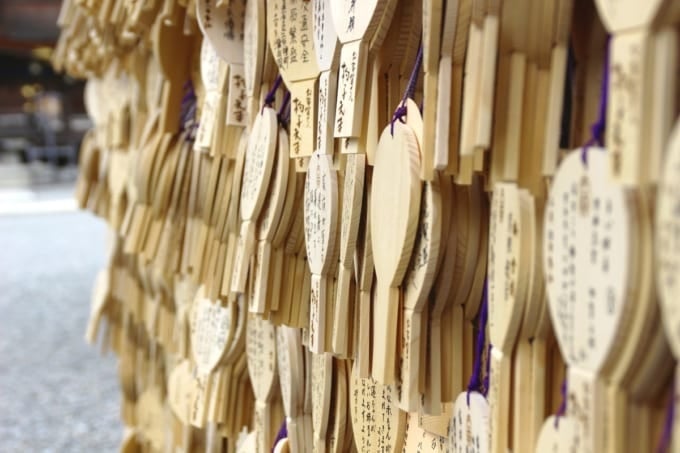
Taga Taisha Shrine in Japan is famous for its unique rice paddle-shaped charms and votive plaques, known as O-Taga Shamoji. Interestingly, the Japanese word otamajyaku-shi (“tadpole”) is said to have originated from the name of these sacred paddles.
The reason behind this unusual shape dates back to the reign of Empress Genshō. According to legend, the shrine’s priests prayed for the Emperor’s recovery from illness by offering freshly cooked rice along with a rice paddle carved from Shide wood. Miraculously, the Emperor regained full health, and since then, the Taga Shamoji has been revered as a lucky charm for good fortune and protection.
O-Taga Shamoji charms come in both practical sizes and large decorative types. The paddle-shaped votive plaques (shamoji ema) bear the words “O-Taga-san Shamoji Ema” and are especially popular for success prayers—whether for academic entrance exams, job applications, or skill certifications. Don’t miss the giant sacred paddle displayed at the shrine’s main hall.
◆ Pray for longevity with the "Lifespan Stone"!
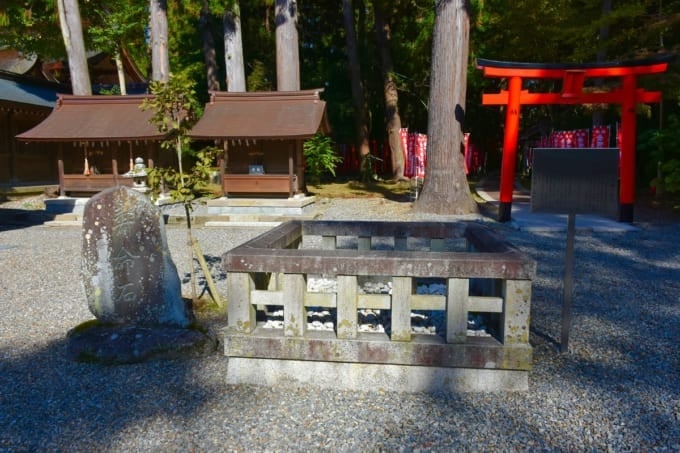
Known as a deity of longevity blessings, Taga Taisha houses the sacred Jumyō Stone, a rock with historical ties to Chōgen Shōnin, a Buddhist monk tasked with rebuilding Tōdai-ji Temple. It is said that Chōgen rested here, setting down his heavy load atop the stone.
Located to the right of the main hall, the stone is surrounded by small white pebbles inscribed with visitors’ wishes. Despite his old age, Chōgen is believed to have gained an extra 20 years of life through the divine power of this stone, allowing him to complete his monumental work.
Visitors can offer prayers at the Jumyō Stone for health, longevity, and the strength to accomplish great goals. White prayer stones are available at the shrine’s office for anyone wishing to receive the stone’s blessings.
◆ Okushoin Garden, A Historic Retreat Linked to Toyotomi Hideyoshi
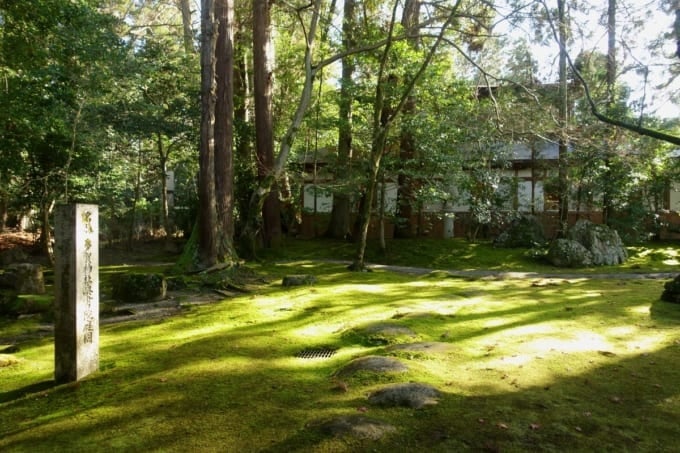
Hidden within the precincts of Taga Taisha Shrine lies the Okushoin Garden, a lavish landscape steeped in history and closely tied to the legendary warlord Toyotomi Hideyoshi. In 1588 (Tenshō 16), Hideyoshi donated 10,000 koku of rice to Taga Taisha, praying for the recovery of his mother, Ōmandokoro, from illness. It is believed that the Okushoin Garden and the Taikō Bridge were constructed as part of Hideyoshi’s dedication.
Taga Taisha also preserves Hideyoshi’s prayer letter, adding a tangible connection to his legacy. Inside the Okushoin, visitors are greeted by magnificent fusuma-e (sliding door paintings) decorated with gold leaf, portraying Mount Fuji, cranes, Chinese lions, and white peonies—each detail radiating elegance. From here, you can gaze out at the refined beauty of the garden and savor a truly luxurious moment.
Mantō-sai: A Spectacular August Festival at Taga Taisha
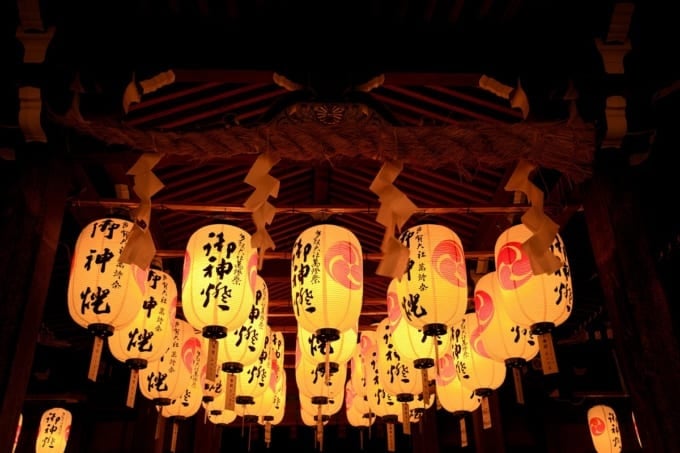
Throughout the year, Taga Taisha hosts numerous traditional ceremonies and events. The year begins with the Saitan-sai on January 1, followed by the Okina Hajimeshiki Noh performance on January 3, and the Setsubun Festival in February, featuring the Oni-no-Mai (Demon Dance) from Shimane Prefecture. In June, the Otaue Rice Planting Festival and the Nagoshi-no-Ōharae purification rite are held, continuing the shrine’s rich seasonal traditions.
Among these events, the Mantō-sai in August stands out as a beloved summer highlight in Shiga Prefecture. Held over three days, the festival features more than 10,000 glowing lanterns, creating a breathtaking sight. Visitors also witness heartfelt acts of gratitude offered to the goddess believed to protect ancestral spirits—making it a deeply moving and visually stunning celebration.
Don’t Forget to Try the Famous Itokiri Mochi After Visiting Taga Taisha Shrine
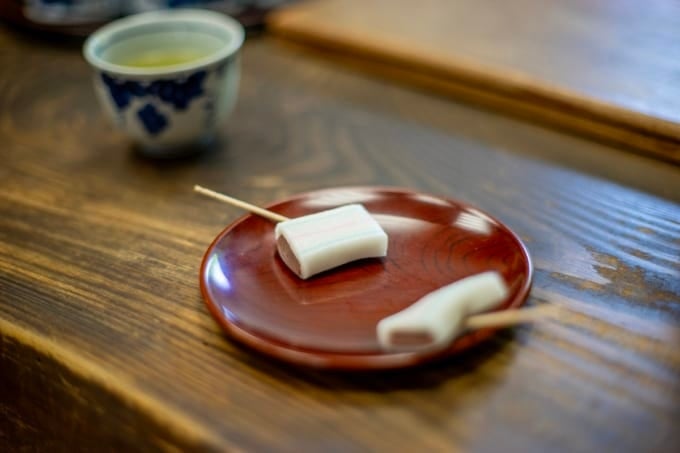
When exploring Taga Taisha Shrine, one treat you simply can’t miss is the famous Itokiri Mochi. This pure white rice cake is decorated with three beautiful, candy-like lines, making it visually striking and unique. Soft in texture and delicate in flavor, Itokiri Mochi is a signature sweet sold at the shrine’s entrance area. Make sure to indulge in this beloved specialty as part of your visit.
How to Access Taga Taisha Shrine
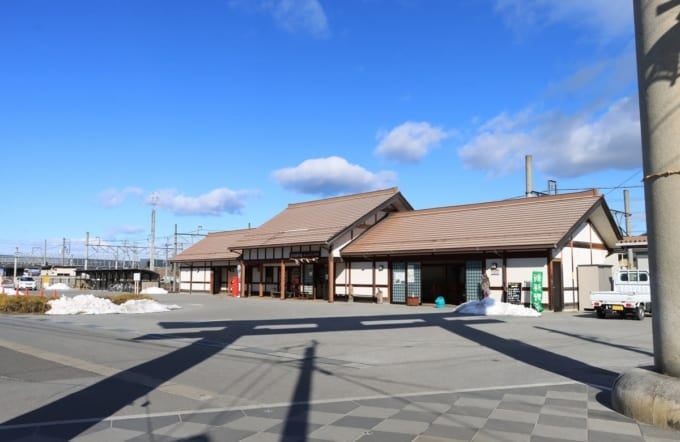
The gateway station via the Tokaido Shinkansen is JR Maibara Station. From there, the closest stop is Taga Taisha-mae Station on the Ohmi Railway, just about a 10-minute walk from the shrine.
If traveling by car, the nearest interchange is Taga Smart Interchange (downbound only). For upbound travelers, the nearest interchange is Hikone Interchange.
◆ By Car
From the Meishin Expressway’s Taga Smart Interchange (downbound only — exit from Tokyo direction and entrance toward Kyoto/Osaka), it takes just about 3 minutes by car to reach your destination. If you are coming from the upbound direction, it’s about a 10-minute drive via National Route 306 from the Hikone Interchange.
https://maps.google.com/maps?ll=35.221265,136.287485&z=15&t=m&hl=ja&gl=JP&mapclient=embed&saddr=%E9%AB%98%E5%AE%AE%E6%B1%A0%E3%80%81%E3%80%92522-0341%20%E6%BB%8B%E8%B3%80%E7%9C%8C%E7%8A%AC%E4%B8%8A%E9%83%A1%E5%A4%9A%E8%B3%80%E7%94%BA%E5%A4%9A%E8%B3%80%E9%AB%98%E5%AE%AE%E6%B1%A0&daddr=%E5%A4%9A%E8%B3%80%E5%A4%A7%E7%A4%BE%E3%80%81%E3%80%92522-0341%20%E6%BB%8B%E8%B3%80%E7%9C%8C%E7%8A%AC%E4%B8%8A%E9%83%A1%E5%A4%9A%E8%B3%80%E7%94%BA%E5%A4%9A%E8%B3%80%EF%BC%96%EF%BC%90%EF%BC%94&dirflg=d
◆ By Train
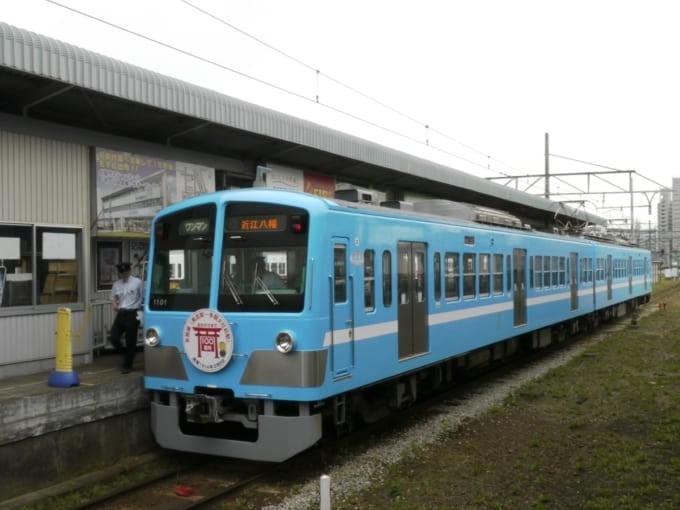
From JR Maibara Station, take the Ohmi Railway to Taga Taisha-mae Station, the closest station to Taga Taisha Shrine. The journey takes around 32 minutes. During morning and evening hours, there are direct trains from Maibara Station. However, during midday, you will need to transfer at either Hikone Station or Takamiya Station.
◆ By Local Bus or Shared Taxi
From Taga Taisha-mae Station, it’s about 500 meters to Taga Taisha, roughly a 10-minute walk.
Taking a local bus or shared taxi is also a convenient option. From JR Hikone Station or Minami-Hikone Station, hop on the Kokoku Bus Taga Line and get off at the "Kokudo Taga Taisha" bus stop—it’s only about a 3-minute walk to the shrine. For even more convenience, the "Ai-nori Taxi Taga" shared taxi stops directly in front of Taga Taisha.
If you’re traveling on the Nagoya–Kyoto express bus, you can also reach Taga Taisha via the "Meishin Taga Bus Stop" along the Meishin Expressway by taking the shared taxi. On foot, it’s about a 20-minute walk from the Meishin Taga Bus Stop to the shrine.
To use the shared taxi, please check the timetable and make a reservation by calling 0749-22-1111 at least one hour before your intended departure.
Name: Taga Taisha
Address: 604 Taga, Taga-cho, Inukami-gun, Shiga Prefecture, Japan
Official Website: http://www.tagataisya.or.jp/
RELATED ARTICLES





REGIONS
CATEGORIES
FEATURED ON Japan
-
Ancient history stroll: 8 must-visit tourist spots in Kashihara City for history lovers
-

From the Southeastern of Mount Hakodate, “Tachimachi Cape,” you can gaze out over the sheer cliff coastline and toward the Shimokita and Tsugaru Peninsulas.
-

Informatio About Yokohama Anpanman Children’s Museum
-

5 Must-Visit Tourist Spots in Nagasaki You Can Enjoy Even on Rainy Days
-

A Town in Full Bloom! Top 5 Must-Visit Tourist Spots in Sera, Hiroshima
MOST POPULAR ON Japan
-
 1
1Doha: Must-see Attractions in the Capital of Qatar
-
 2
2Toronto: 10 Things to do in this Picturesque Canadian City
-
 3
3Amarillo: A City Famous for It’s Amazing Canyons, Great History and Music
-
 4
4South Korea: Dazzling Scenery, Rich Culture and Fascinating History
-
 5
5Kuwait: A Country in Middle East Asia Famous for Hot Sand Dunes and Stunning Cityscape