


Name: Old City of Jerusalem
Address: Jerusalem, Israel
Official/Related Website: http://whc.unesco.org/en/list/148/
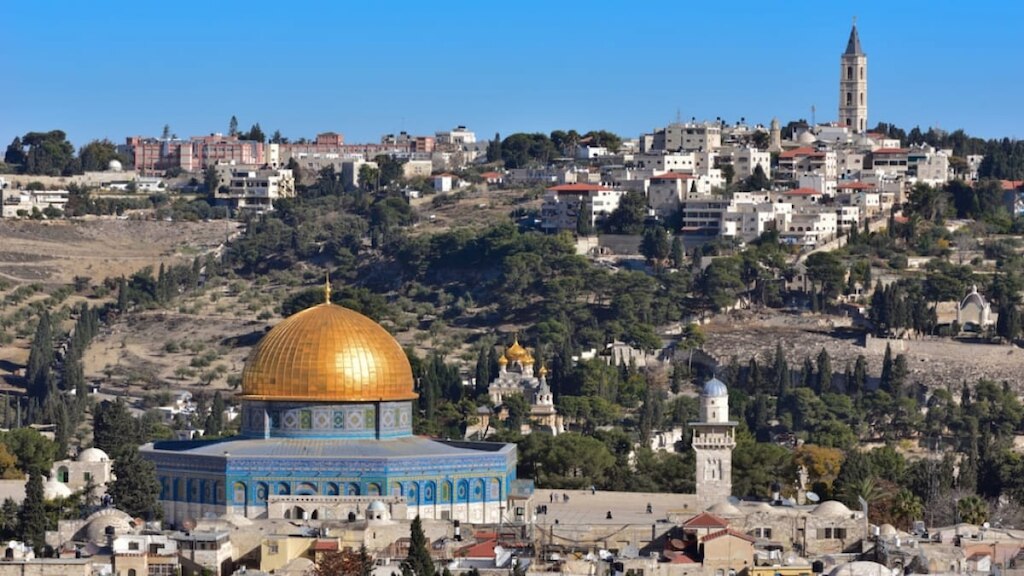
One of the Seven Wonders of the World: Discover Jerusalem’s Old City and Its Iconic Walls – A UNESCO World Heritage Site
Mar 18, 2026
510 views
Jerusalem, the sacred city revered in the world’s three major religions—Christianity, Judaism, and Islam—holds an unparalleled historical and spiritual significance. Within this ancient city lies the Old City of Jerusalem and its Walls, a UNESCO World Heritage Site officially inscribed in 1981 during the first Extraordinary Session of the World Heritage Committee. Remarkably, it remains the only site ever registered during such a special session.
Due to the region’s unstable political climate, this heritage site requires strict protection. The Old City’s inscription is unique, as it was nominated by Jordan—highlighting the complexity of Jerusalem’s delicate territorial and cultural issues. Just a year after its inscription, in 1982, it was added to the UNESCO List of World Heritage in Danger, and it still holds the record as the site with the longest continuous presence on this list.
Today, Jerusalem is home to some of the world’s most iconic tourist attractions, drawing millions of travelers eager to experience its rich history, diverse cultures, and profound religious heritage. Let us explore in detail the UNESCO World Heritage treasures found in this extraordinary city.
table of contents
[x] close
One of the Seven Wonders of the World: Discover Jerusalem’s Old City and Its Iconic Walls – A UNESCO World Heritage Site
What is the Old City of Jerusalem and Its Walls?
The Old City of Jerusalem is a UNESCO World Heritage Site renowned for its profound religious and historical significance. Within its ancient boundaries lie sacred landmarks from three major faiths: Judaism’s Temple Mount and Western Wall, Christianity’s Church of the Holy Sepulchre, and Islam’s Dome of the Rock and Al-Aqsa Mosque. The Old City is divided into four quarters—Muslim, Christian, Jewish, and Armenian—each offering unique cultural and spiritual heritage.
Covering only about 0.9 square kilometers within the modern city’s 125-square-kilometer area, the Old City was once synonymous with Jerusalem itself until 1860. True to biblical descriptions of a fortified city, it is surrounded by imposing stone walls. Its history dates back to the 11th century BCE, when King David ruled and established the City of David outside the Dung Gate near today’s Western Wall. King Solomon expanded the city walls, and between 41 and 44 CE, King Agrippa I of Judea built the “Third Wall.” The walls we see today were constructed in 1538 under the orders of Sultan Suleiman the Magnificent.
How to Access the Old City of Jerusalem
From Tel Aviv, where Israel’s main airport is located, you can reach Jerusalem in about one hour by train, bus, taxi, shared taxi (sherut), or car. Public transport typically brings you to Jerusalem Central Station, from which you can take the light rail or a bus to Damascus Gate—the main entrance to the Old City.
Highlight ①: The Western Wall (Wailing Wall)
In the Jewish Quarter of Jerusalem’s Old City, located in the southwest, lies one of Israel’s most famous landmarks — the Western Wall, also known as the Wailing Wall. This sacred site is a remnant of the western side of the outer wall that surrounded the Second Temple, rebuilt by King Herod around 20 BCE. For Jews, it is simply called the Western Wall. The name “Wailing Wall” came from the sight of Jewish worshippers lamenting the destruction of the Temple, fervently praying for the restoration of their nation at this very spot.
The Western Wall has endured a turbulent history, and it’s only in recent times that Jews have been allowed access again. Although Jerusalem remains politically sensitive, the site continues to attract devout Jewish visitors from all over the world, making it a UNESCO World Heritage Site. Small slips of paper bearing personal prayers and wishes can be found tucked into the cracks between the ancient stones.
Visitors of all faiths are welcome. The men’s section is to the left and the women’s section to the right when facing the wall. Men are required to wear a kippah (a traditional Jewish cap), which is available free of charge
Highlight ②: The Muslim Quarter
The Muslim Quarter is the largest and most populous among the four quarters of Jerusalem’s Old City. Located in the northeast, it borders the northern wall of the Temple Mount, Islam’s third holiest site. Here you’ll find historic gates such as Damascus Gate, Lions’ Gate, and Herod’s Gate. Before the 1929 Western Wall riots, Jews, Christians, and Muslims lived side by side in this diverse neighborhood. The Temple Mount houses the sacred rock where Prophet Muhammad is believed to have ascended to heaven. Covering it is the stunning Dome of the Rock, one of the city’s most iconic landmarks.
Entering the UNESCO World Heritage–listed Old City through one of the Muslim Quarter’s gates, visitors are greeted by bustling markets filled with stalls selling fresh produce, clothing, souvenirs, and more. The lively atmosphere makes walking through this area an experience in itself, offering an authentic taste of local life in Jerusalem.
◎ Summary
Israel considers Jerusalem as its capital, but this status is not internationally recognized. The Old City of Jerusalem and its ancient walls are uniquely registered as a UNESCO World Heritage Site under a special request by Jordan. Due to ongoing global political instability, Jerusalem is treated as an independent heritage site that does not officially belong to any country. With its long, turbulent history and deep cultural and religious significance, Jerusalem is a place overflowing with the hopes and prayers of countless people. It remains one of the world’s most remarkable UNESCO sites—a destination worth visiting at least once in your lifetime.
RELATED ARTICLES





REGIONS
CATEGORIES
FEATURED ON Israel
-
[Israel Security] Is it safe to tour major tourist spots? Introducing points to note when traveling!
-
15 Must-See Tourist Spots in Israel: Birthplace of Three Religions
-

El Al Becomes First Airline to Vaccinate All Staff
-

The Safest Places to Visit in the Middle East in 2022
-

Tel Aviv : A Vibrant Mediterranean Manhattan
MOST POPULAR ON Israel
-
 1
1Doha: Must-see Attractions in the Capital of Qatar
-
 2
2Toronto: 10 Things to do in this Picturesque Canadian City
-
 3
3Amarillo: A City Famous for It’s Amazing Canyons, Great History and Music
-
 4
4South Korea: Dazzling Scenery, Rich Culture and Fascinating History
-
 5
5Kuwait: A Country in Middle East Asia Famous for Hot Sand Dunes and Stunning Cityscape