To Avoid Infectious Diseases Abroad! Can You Bring Insect Repellent Spray on an Airplane?

Depending on your destination, insect repellent spray can be considered an essential item. Since it is a chemical sprayed directly on the skin, many travelers prefer to bring safe and reliable Japanese-made products. However, most Japanese insect repellent sprays come in aerosol form. Because they are pressurized with gas, travelers may wonder whether they are allowed on airplanes. Here, we summarize the rules for handling insect repellent sprays when traveling by air, which are especially useful during overseas trips.
table of contents
[x] close
To Avoid Infectious Diseases Abroad! Can You Bring Insect Repellent Spray on an Airplane?
Infectious diseases transmitted by mosquitoes are the real danger abroad
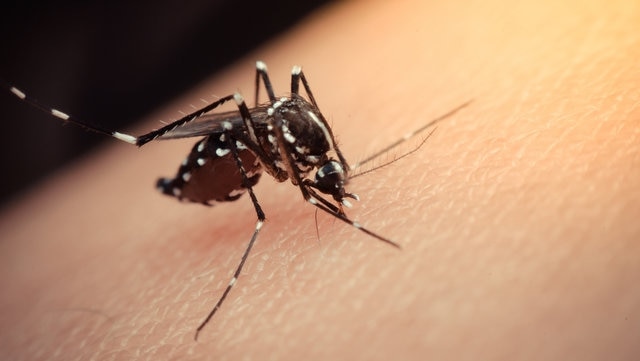
In 2014, mosquitoes carrying the dengue virus—which should not normally exist in Japan—were found domestically for the first time in about 70 years, causing a major stir. Similarly, as seen with the spread of Zika fever in Central and South America, infectious diseases transmitted by blood-sucking insects like mosquitoes continue to be a global issue.
These diseases spread the moment a mosquito’s proboscis pierces the skin, meaning there is a risk of infection right away. In other words, it is necessary to drive away these carriers before they even land on the body.
The most effective means of preventing mosquito-borne infections is insect repellent spray. However, foreign products may either be less effective or, conversely, contain dangerously high concentrations harmful to humans. For this reason, Japanese insect repellent sprays are far more trustworthy. Ideally, you would want to bring Japanese insect repellent spray with you on the plane.
Insect repellent spray is allowed on airplanes
In conclusion, insect repellent sprays can be both checked in and carried onto the airplane. The conditions are: each container must not exceed 0.5 liters or 0.5 kilograms, and the total amount of cosmetic and medical spray products per person must not exceed 2 liters or 2 kilograms.
Since it is rare for a single insect repellent spray to exceed 0.5 liters or 0.5 kilograms, travelers mainly need to be mindful not to go over the 2 liters or 2 kilograms limit for all sprays combined.
Additionally, aerosol sprays pressurized with gas must have a protective cap or similar safety device to prevent leakage.
Safer to check in insect repellent spray
In reality, there are very few situations on an airplane where you would need insect repellent. For that reason, it is generally simpler to check insect repellent spray as part of your checked luggage.
While it’s not impossible that mosquitoes from high-risk regions could end up inside the plane, it is still recommended to apply repellent beforehand rather than spraying it in the cabin. The effects of insect repellent spray usually last for several hours, which is sufficient for time spent onboard.
For those still worried, it is a good idea to purchase the smallest, palm-sized type of spray.
Summary
It is possible to bring insect repellent spray on an airplane. However, be sure to check that the capacity of individual containers and the total volume of sprays do not exceed the set limits.